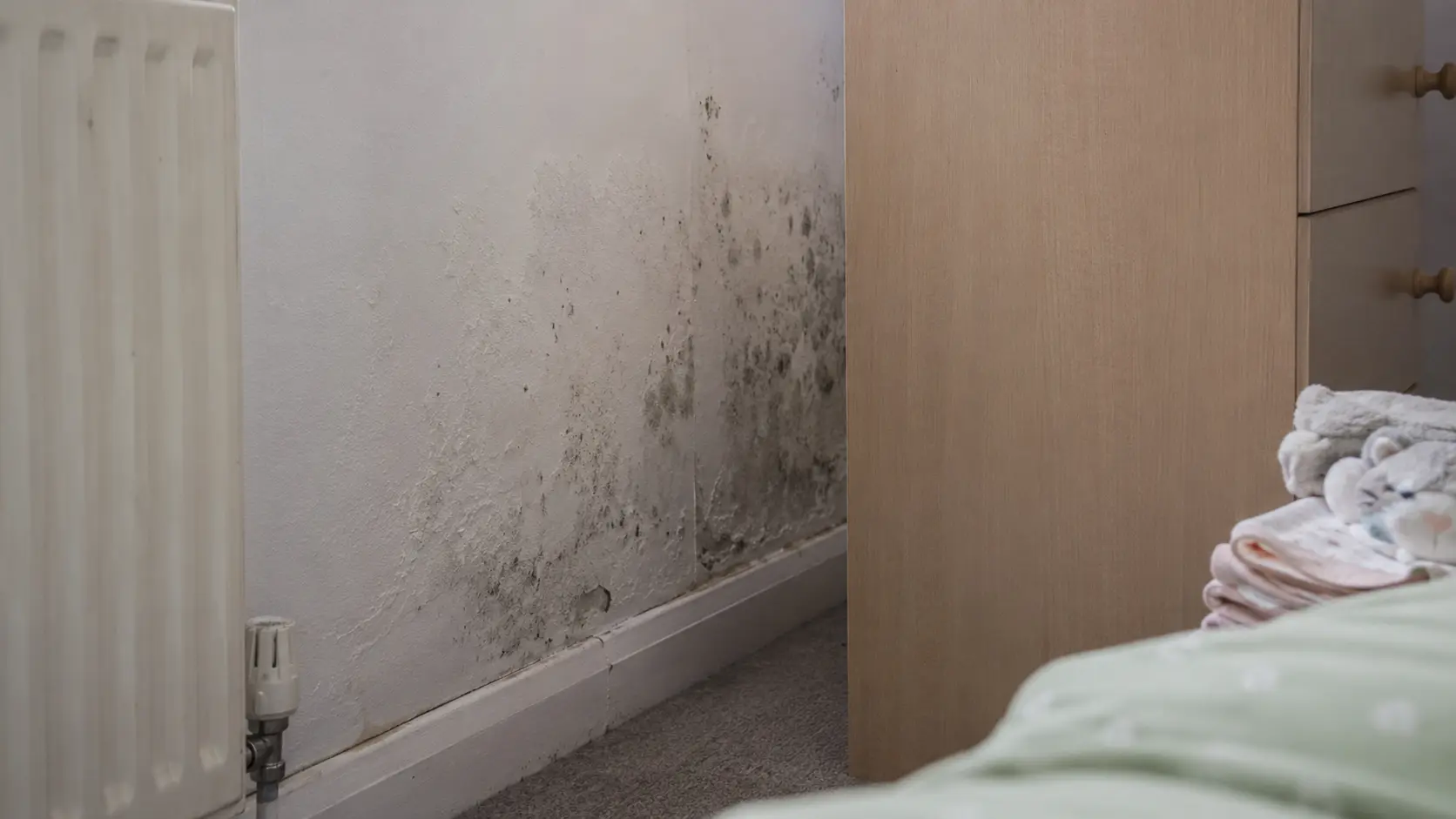
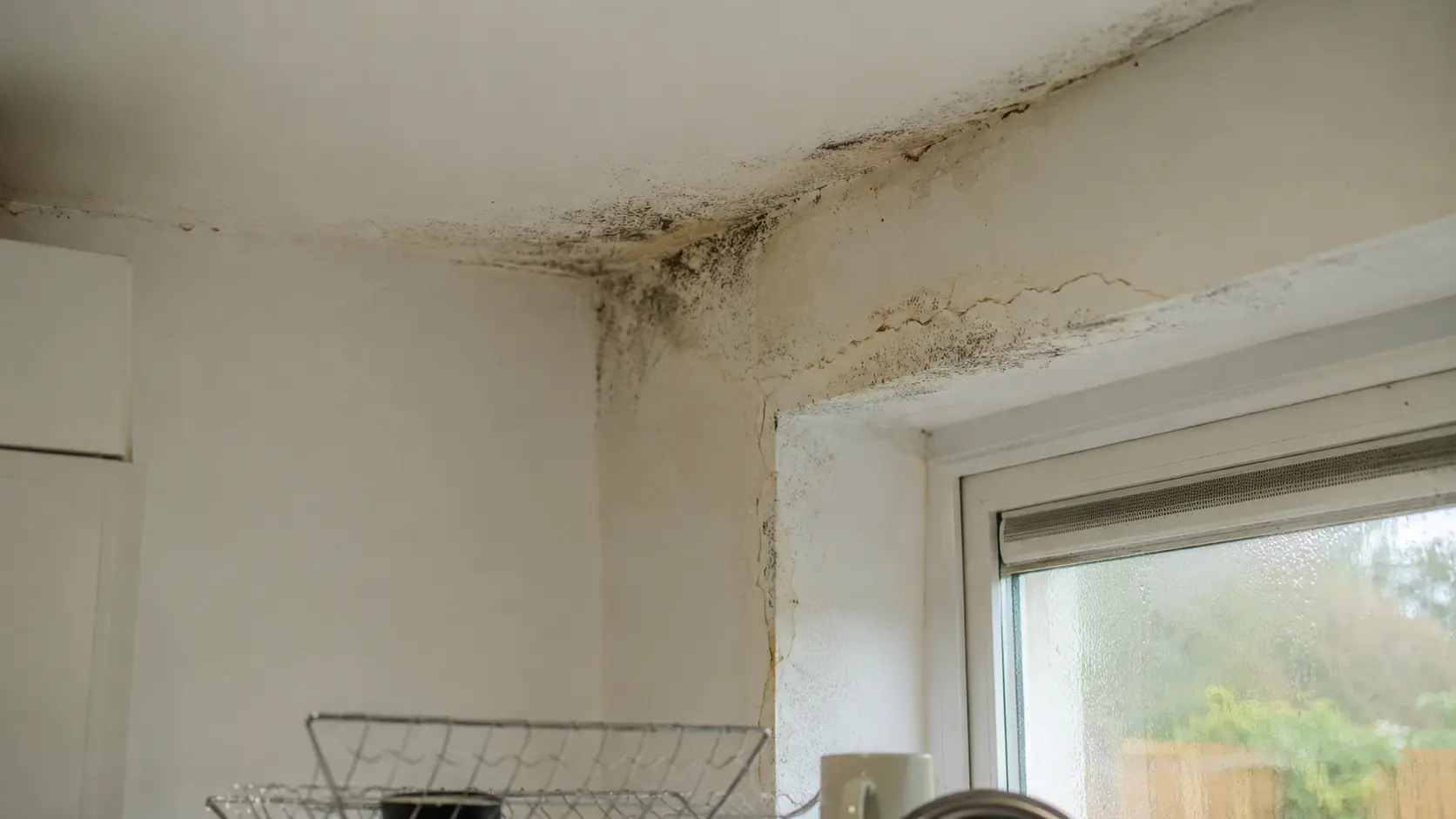
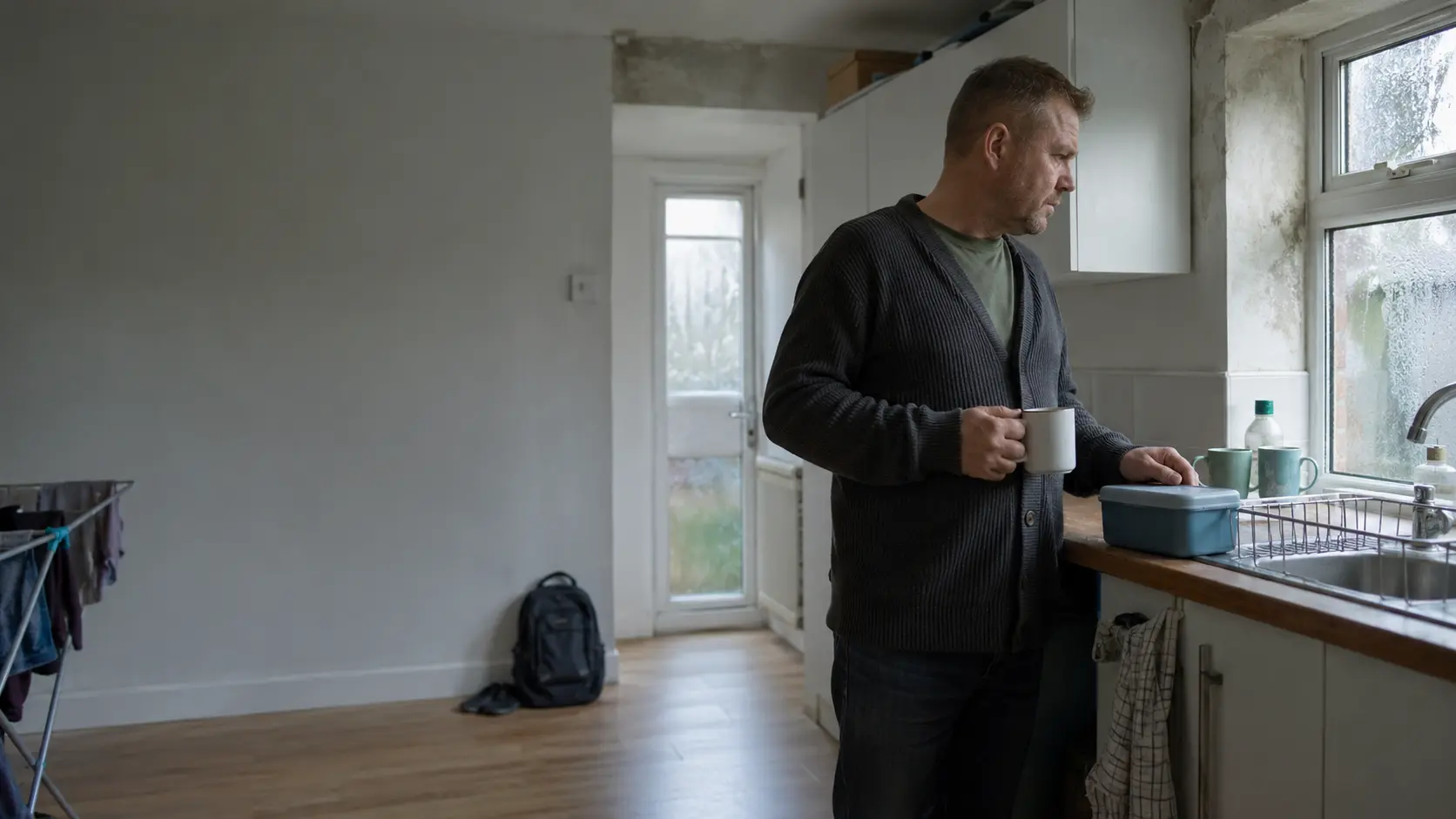
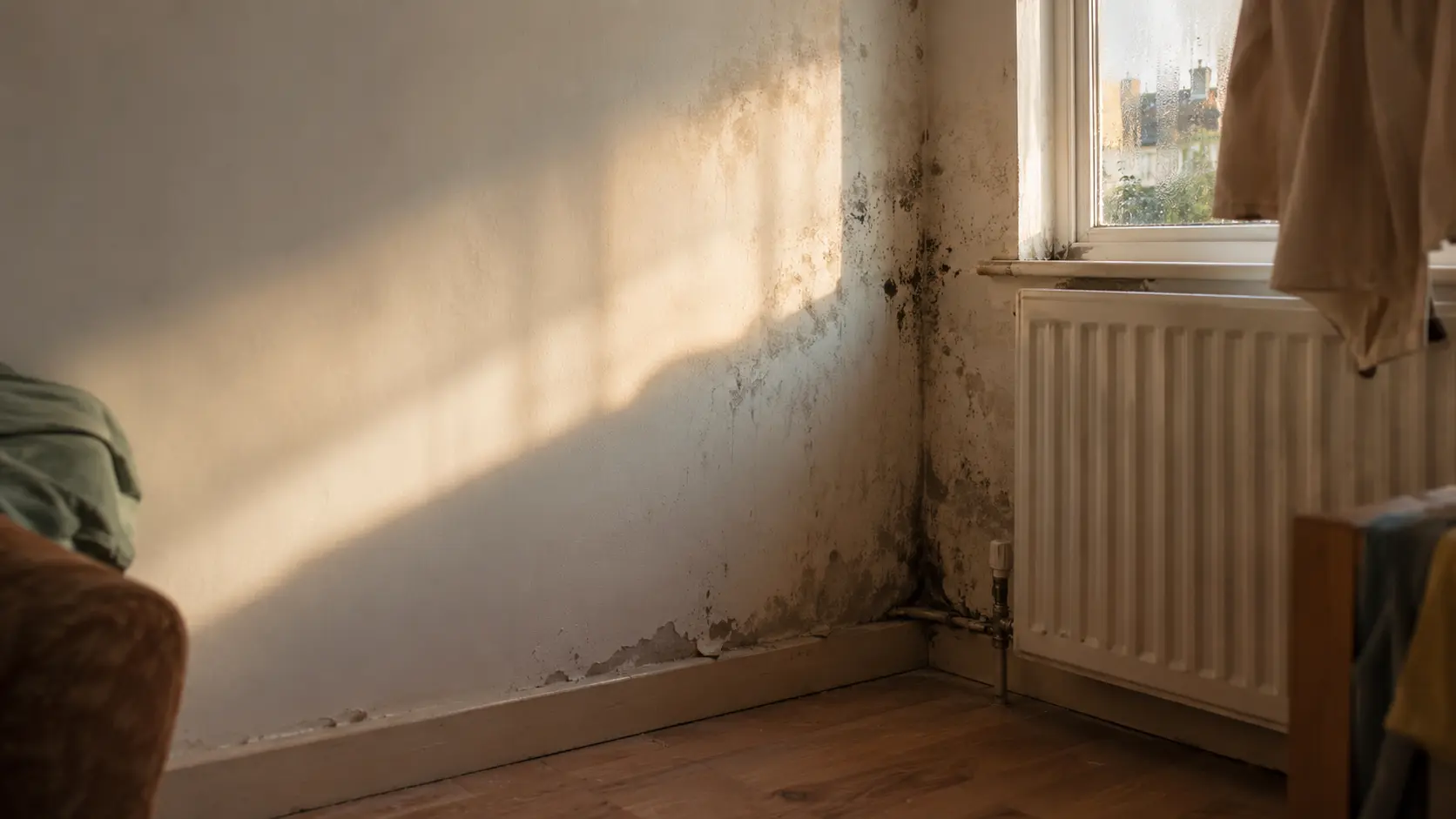
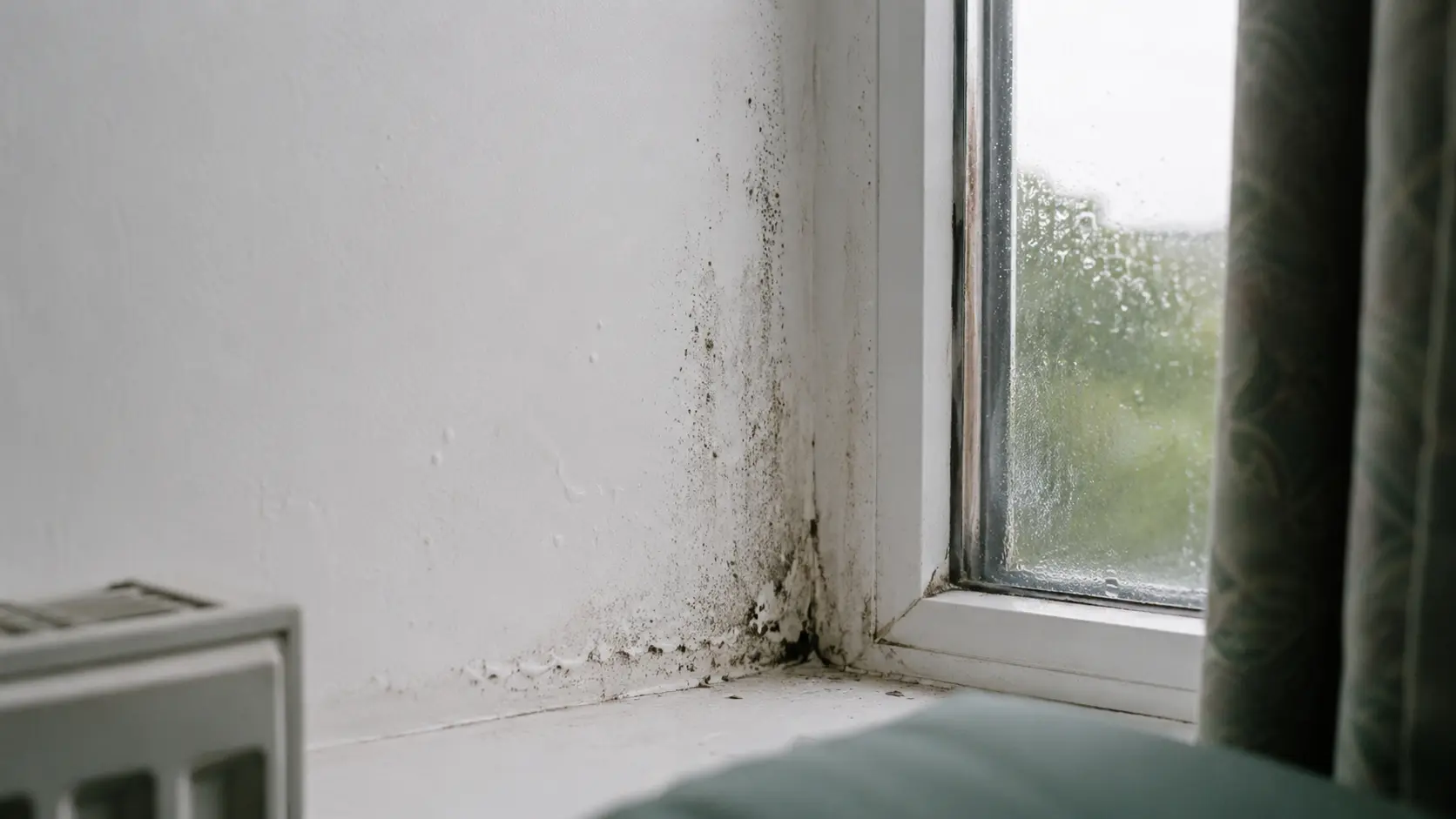
Black spots around a window, a corner, or behind furniture. Mould in a rented home almost always points to a building problem, and here is how to get it treated at the source, not just wiped away.
Free to use · Guidance and tools, not legal advice
Last updated 9 July 2026
Start here
What Is Actually Causing the Mould in Your Rented Home
Mould in a rented home in Ireland almost always points to a building problem underneath, so wiping it away without fixing the cause only buys a few weeks before it returns. The dark patches you see around windows, in corners, on ceilings or behind wardrobes are the visible end of cold surfaces, trapped moisture, poor ventilation or a hidden leak.
Naming the likely cause in your report makes it far harder to dismiss as your fault. Because the minimum standards for rented accommodation require a home to be free from damp and kept in sound repair, treating persistent mould is usually your landlord’s job once the building cause is identified.
Before you go further
This is general guidance, not legal advice. For advice on your own tenancy, contact Threshold or Citizens Information. If anyone is in immediate danger, call 112 first.
Your plan
Four Steps to Get Mould Treated Properly
STEP 1
Photograph It
Wide shots of each affected room and close-ups of the mould, with the date. Note any damaged clothes or furniture.
STEP 2
Report It in Writing
Send a calm first report asking for an inspection and a plan to treat the cause, not just the surface.
STEP 3
Give a Fair Window
Allow five to seven days for a reply. If it is spreading or affecting health, ask for a quicker response.
STEP 4
Escalate if Ignored
No action? A formal request, then your local authority housing standards section and Threshold.
Once your landlord agrees to act
What Should a Good Mould Repair Actually Include?
A proper job does more than paint over the problem. A genuine repair starts by finding the source, whether that is a leak, cold bridging or a ventilation gap, then cleans and treats the affected areas so existing spores are removed, not just hidden under fresh paint.
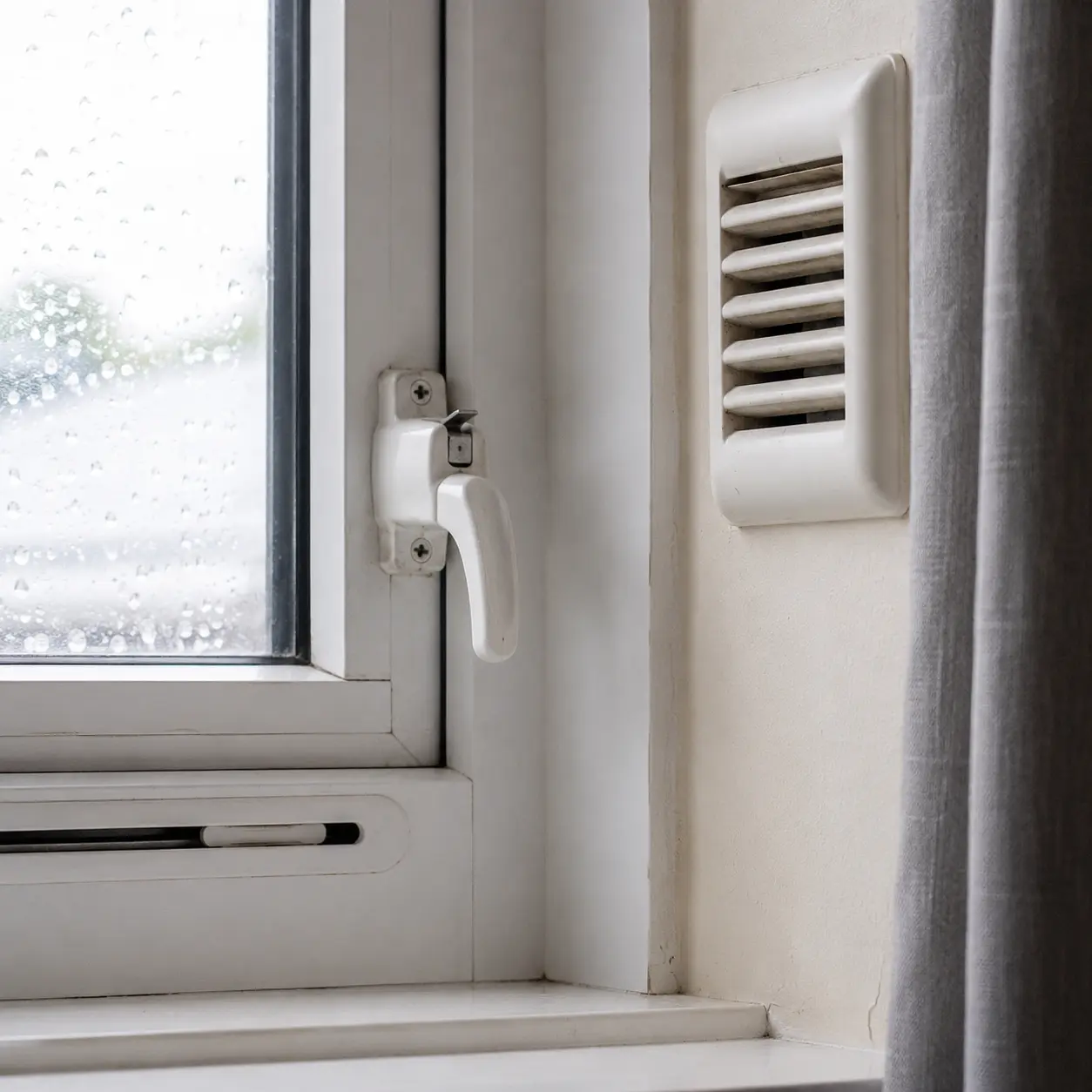
Where ventilation is the issue, that might mean a working extractor fan or trickle vents. Where cold walls are the cause, insulation or heating improvements may be needed. After the work, take fresh photos and watch the same spots for thirty days to be sure it does not return.
Finds and fixes the source, not just the surface
Treats and removes existing spores, not just fresh paint
Not sure how serious your mould is? Get a clear answer in a minute. Check my next step
Common questions
Renting with Mould in Ireland
Whose responsibility is mould in a rented house in Ireland?
Your landlord is responsible for keeping the property to the minimum standards for rented accommodation, which include being free from damp and kept in good structural repair. Where mould is caused by a building fault such as a leak, poor ventilation or missing insulation, putting it right is the landlord’s job. Your job is to report it clearly, give access, and ventilate day to day.
Can I be blamed for causing the mould myself?
Landlords sometimes say mould is down to how a tenant lives, such as drying clothes indoors. Lifestyle can add moisture, but persistent mould almost always has a building cause underneath, like cold walls, a leak or a broken extractor fan. That is exactly why an inspection matters, and why your dated photos and notes are so useful.
Is black mould in a rental dangerous?
Mould can affect breathing, especially for children, older people and anyone with asthma or allergies. It should never be ignored, and if someone’s health is affected you should mention that in your report and speak to a GP. The mould and damp checker will tell you whether to treat your situation as routine or urgent.
What if the landlord just paints over the mould?
Painting over mould without fixing the cause hides it for a few weeks, then it returns. A proper repair finds the source, whether that is a leak, ventilation or cold bridging, treats the affected surfaces, and stops it recurring. If it comes back, that is a sign the root cause was never addressed, and the resolution should be reopened.
How long should I give the landlord to deal with mould?
For a first friendly report, five to seven days for a reply is reasonable. If there is no response or plan, a formal request with a ten to fourteen day window is the next step. Where health is affected or it is spreading fast, shorter timescales are fair, and you can escalate sooner.
Should I stop paying rent until the mould is fixed?
No. Keep paying your rent. Withholding rent without advice can put your tenancy at risk and weakens your position. Keep the pressure on through written requests and the proper escalation routes, and get advice from Threshold before considering any formal step.
Mould in a rented home in Ireland gets fixed once it is on the record. Generate your first report now, free and private, and start the clock on getting it sorted.